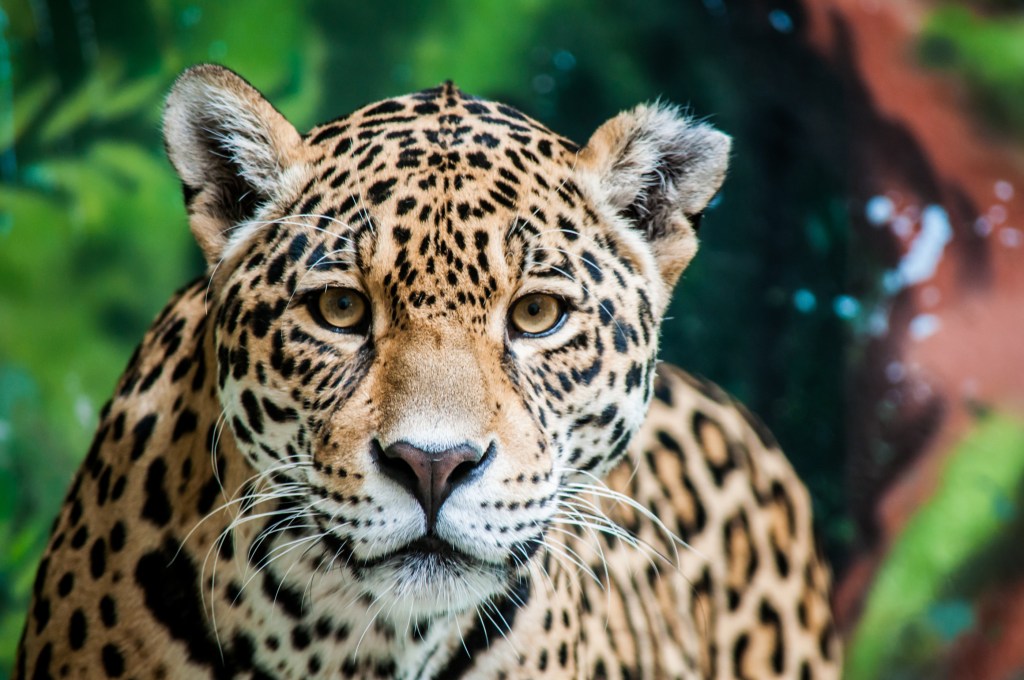
Jaguars range throughout much of South and Central America, reaching as far north as Sonora, Mexico, and southern Arizona. The species is endangered in both the U.S. and Mexico, and jaguars at the northern edge of the range are especially threatened by habitat fragmentation, human-wildlife conflict, and climate change. Maintaining natural connectivity may be crucial to preserving Mexico’s jaguar populations.
We are analyzing whole genome sequencing data from jaguars to assess recent and historical connectivity of populations in Mexico, along with other populations in South and Central America, as well determine barriers to gene flow. We are additionally assessing genetic indicators of population viability of Mexican jaguars, including inbreeding and effective population size. Future work will focus on identifying key genomic regions for adaptation to the dry climate of the Sonoran desert. We will also design a molecular toolkit to facilitate genomic analyses of a broad variety of sample types, including bones, hair, and scat, allowing many more jaguars to be included in the study.
This project is a highly collaborative, multinational effort involving the Culver lab (Eldridge Wisely, Natalie Payne, Karla Vargas, and Melanie Culver), Ivonne Cassaigne, Victor Luja, Yamél Rubio Rocha, Ron Thompson, Eduardo Camacho Puga, Luis E. Eguiarte, Susana Ilescas, Mario Buil, Marcela Aguallo, and Rodrigo Nuñez. If you would like to contribute jaguar samples for genomic analysis, please contact Eldridge Wisely (eldridgewisely@arizona.edu).
Funding for this project has been provided by the US Department of the Interior, Reid Park Zoo, and University of Arizona Graduate and Professional Student Council.
 Culver Lab